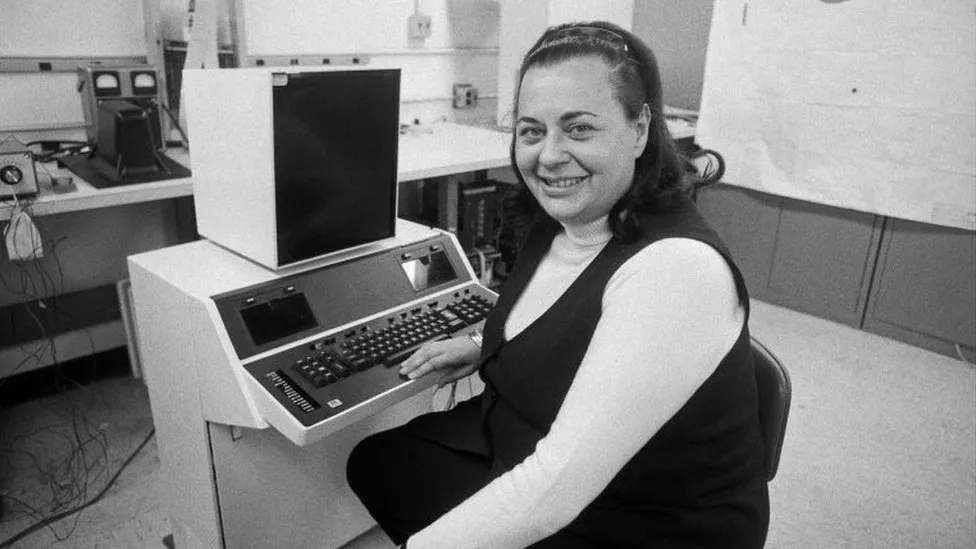
Evelyn Berezin was a computer-systems engineer, specialist in logic design and data transmission, entrepreneur, and one of the most interesting figures in mid-20th-century business computing. Her career ranged from large airline reservation systems to dedicated machines for preparing, storing, and editing office documents.
She is often introduced simply as “the inventor of the first word processor.” That description is catchy but needs context. Earlier text-editing and word-processing systems existed, including IBM’s 1964 Magnetic Tape Selectric Typewriter (MT/ST). A more precise description follows the National Inventors Hall of Fame: Berezin’s company developed the first computerized standalone word processor for business use.
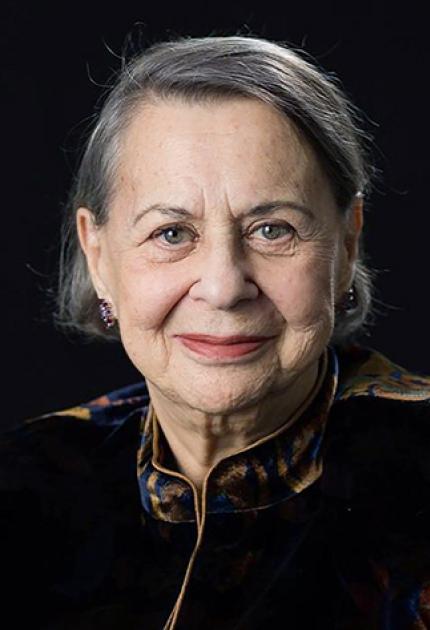
Education and early years
Evelyn Berezin was born in the Bronx, New York, on April 12, 1925. She became interested in science while young, took courses at Hunter College while still in high school, and during World War II combined laboratory work during the day with classes at night.
She earned a bachelor’s degree in physics from New York University in 1945. In 1946 she received an Atomic Energy Commission fellowship for graduate study. Physics and mathematics were natural routes into computing at a time when computer engineering had not yet become an established academic discipline.
From early digital computers to systems design
In 1951 Berezin joined Elecom, a Brooklyn startup building digital computers. According to the Computer History Museum, she spent the period from 1951 to 1969 working at several companies and designing special-purpose computer systems.
Those early machines were constrained by unreliable vacuum tubes and relatively slow, low-capacity magnetic-drum memories. The arrival of practical transistor technology around 1957–1958 greatly expanded what computer designers could build, particularly systems connected to remote terminals.
Teleregister and the United Airlines reservation system
Berezin joined Teleregister Corporation in 1957 as head of logic design. There she helped develop one of the earliest large computerized passenger reservation systems for United Airlines.
Institutional sources differ slightly on the deployment date: the National Inventors Hall of Fame says it was operational by 1961, while the Computer History Museum describes it as delivered around 1962. It is therefore safest to place the deployment around 1961–1962.
Technically, the system was remarkable for its era. Its central design used three independent linked processors, served terminals in 60 U.S. cities, and provided a response time of roughly one second. CHM also reports that the central system suffered no failures over eleven years of operation.
The challenge was not simply to store reservations. The service had to run around the clock, communicate over long distances, and isolate failures without taking down the entire network — problems we would now associate with high availability and distributed systems.
Universo Digital has a separate article examining Berezin’s United Airlines reservation system in greater detail.
Founding Redactron
By the late 1960s, Berezin had encountered a barrier common to women who reached senior technical positions: moving into executive management remained extraordinarily difficult. In 1969 she founded Redactron with several colleagues and became its president.
The company began with only nine people and focused on reducing repetitive office document work. At the time, correcting or revising a typed document could mean retyping entire pages.
The Data Secretary
Redactron’s best-known product was the Data Secretary. The first systems were delivered in September 1971, roughly a year and a half after the company began operating.
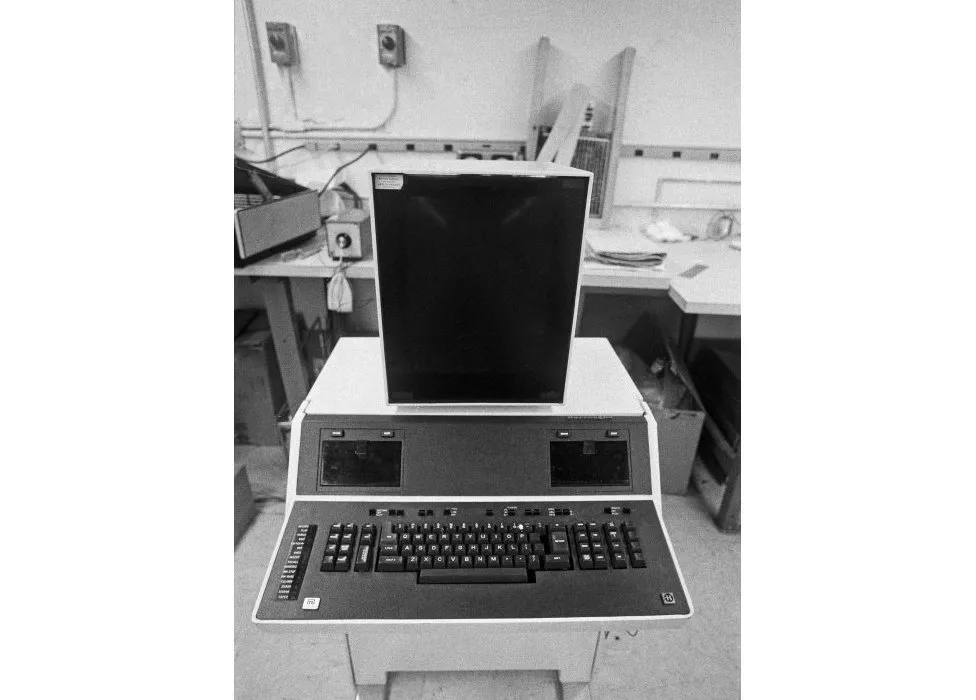
It was not software running on a personal computer in the modern sense. It was a dedicated machine built around a typewriter and specialized electronics. It could record text, retrieve it, edit it, and print a revised version, eliminating the need to retype a document from the beginning whenever changes were required.
Its functions included deleting text and operations comparable to cut and paste. Early models did not even have a modern display; the workflow still depended heavily on the keyboard and printed output.
Some components Redactron needed were not yet available commercially, so the engineering team designed much of its own electronics, including a custom 13-IC MOS chipset. The Computer History Museum describes it as one of the earliest systems of its kind to be implemented commercially.
Was it really the first word processor?
That depends on the definition. IBM introduced the Magnetic Tape Selectric Typewriter (MT/ST) in 1964, combining a Selectric typewriter with magnetic-tape storage. IBM describes the MT/ST as the first word-processing device, although it was analog rather than a computerized standalone system.
The safest historical description is therefore narrower: the National Inventors Hall of Fame identifies the Data Secretary as the first computerized standalone word processor for business use and one of the early electronic word processors specifically intended to simplify office work.
Growing a technology company
Redactron expanded rapidly. By 1975 it employed just under 500 people and had built an international sales and service organization. The National Inventors Hall of Fame reports revenue of $16.2 million in 1974.
In 1976 Redactron was sold to Burroughs Corporation. Berezin remained president of Burroughs’ Redactron Division until 1980. That same year she appeared in a BusinessWeek list of 100 leading U.S. businesswomen; according to CHM, she was the only woman on the list who was president of a technology company.
Patents, boards, and venture capital
Berezin later served on boards including CIGNA, Koppers, Datapoint, and Standard Microsystems and advised numerous technology startups. The National Inventors Hall of Fame credits her with 13 U.S. patents.
From 1980 to 1987 she was also involved in venture capital through Greenhouse Management Company, supporting early-stage technology businesses.
Recognition
- Inducted into the Long Island Technology Hall of Fame in 2006.
- Inducted into the Women in Technology International Hall of Fame in 2011.
- Named a Computer History Museum Fellow in 2015 for her early computer-design work and lifetime of entrepreneurship.
- Inducted posthumously into the National Inventors Hall of Fame in 2022 for computer systems for business use.
- Awarded honorary doctorates by Adelphi University and Eastern Michigan University.
Evelyn Berezin died on December 8, 2018, at age 93.
Why her work still matters
Berezin’s career connects two apparently different areas of computing. She designed mission-critical infrastructure capable of processing airline reservations across a national network, and later led a company that brought computing directly into administrative office work.
In both cases the innovation was not simply the computer itself. The important step was understanding a human process — booking a seat or preparing a document — and redesigning that process around the capabilities of digital electronics.
That remains a recognizable pattern in modern computing: the most influential systems are often those that successfully combine hardware, software, communications, and user workflow to solve a concrete problem.
Verified sources and references
- Computer History Museum — Evelyn Berezin, 2015 Fellow.
- Computer History Museum — Oral History of Evelyn Berezin.
- Computer History Museum — Women’s Work.
- National Inventors Hall of Fame — Evelyn Berezin.
- IBM History — The IBM Selectric and MT/ST.
Related: The computerized United Airlines reservation system designed by Evelyn Berezin.